


Engaging residents in historic heritage preservation: a communication campaign case ctudy in Lviv
348 applications for window and door restoration, driven by a public information campaign
In early 2020, Lviv saw the launch of the “Heritage Bureau” (Biuro Spadschyny) — an institution dedicated to promoting the preservation of the city’s cultural heritage. I, Andriy Burda, had the honor of leading its communications department, which set up the institution’s systematic public communications back when it was still finding its feet.
One of the key tasks was to design and roll out an information campaign for the co-financing program for restoring historic doors and windows in Lviv. Over two years, we secured 981 media mentions, ran one city-wide event, and built a social media community of more than 5,000 people.
The result? Over two years, the Heritage Bureau received 348 applications to restore gates and windows in the city’s historic buildings.
Here’s how the co-financing program works: for gate restoration, the Lviv City Council covers 70% of the cost and residents 30%; for windows, the city covers 60% and residents 40%; and when plastic windows are replaced with wooden ones, the cost is split 50/50.
In this communications project, our goals were to:
- draw the community’s attention to preserving the woodwork in historic buildings,
- show that these valuable elements can be saved, and that it’s affordable,
- mobilize the community,
- get as many residents involved as possible,
- show that restoration actually works.
 Everything revolved around the value of the city’s cultural heritage. We appealed to emotion and aesthetics, to a sense of responsibility toward heritage, but also to a purely practical need — sturdy, solid doors protect a home from unwanted guests, and restored windows improve energy efficiency.
The whole campaign aimed to win the trust of residents in Lviv’s historic buildings: to promote the program created by the Lviv City Council and clearly explain how to take part in it through a transparent process.
THE ACTIVITIES THAT DROVE SUCCESS
The first step was to develop the Heritage Bureau’s communications strategy and set up the basic digital foundation for the newly created institution — an official website, social media, and so on.
Creating news hooks
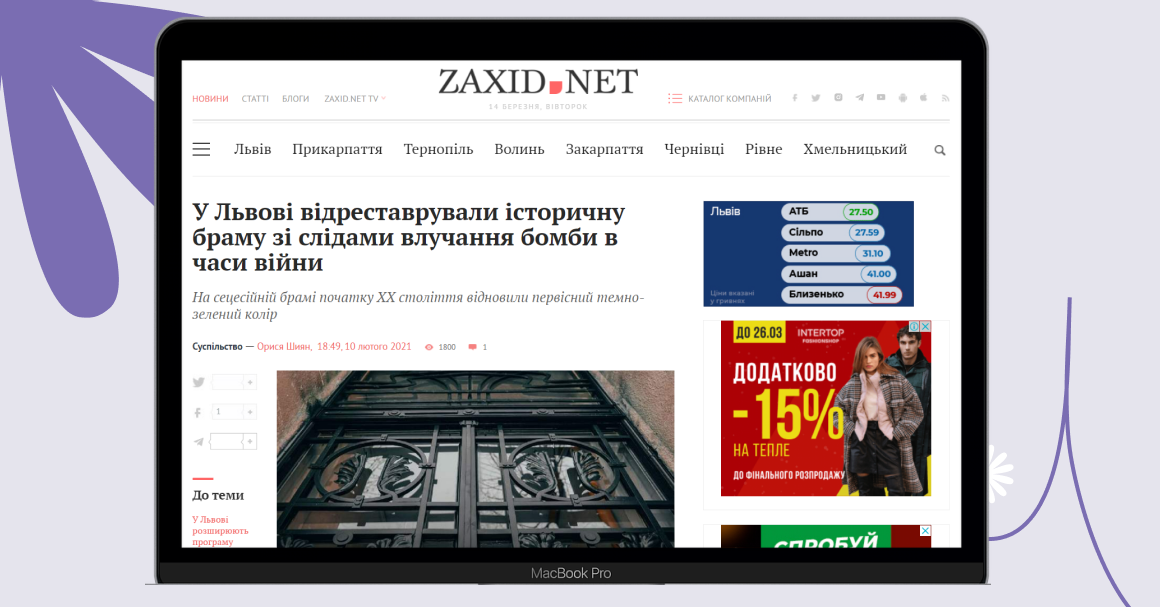
Once the institution’s communication channels were up and running, the press team started telling the stories of people who had already used the program — we went with a case-study approach. In our press releases we showcased freshly restored buildings and explained how to get involved. We put a lot of focus on getting the content to exactly where our target audience hangs out on social media.
 How it actually works
To make sure potential participants understood this wasn’t a cosmetic fix but full-scale restoration, we put together a series of materials on how the work really happens. That way people could grasp the real scale of the effort the specialists put in.
Local media support
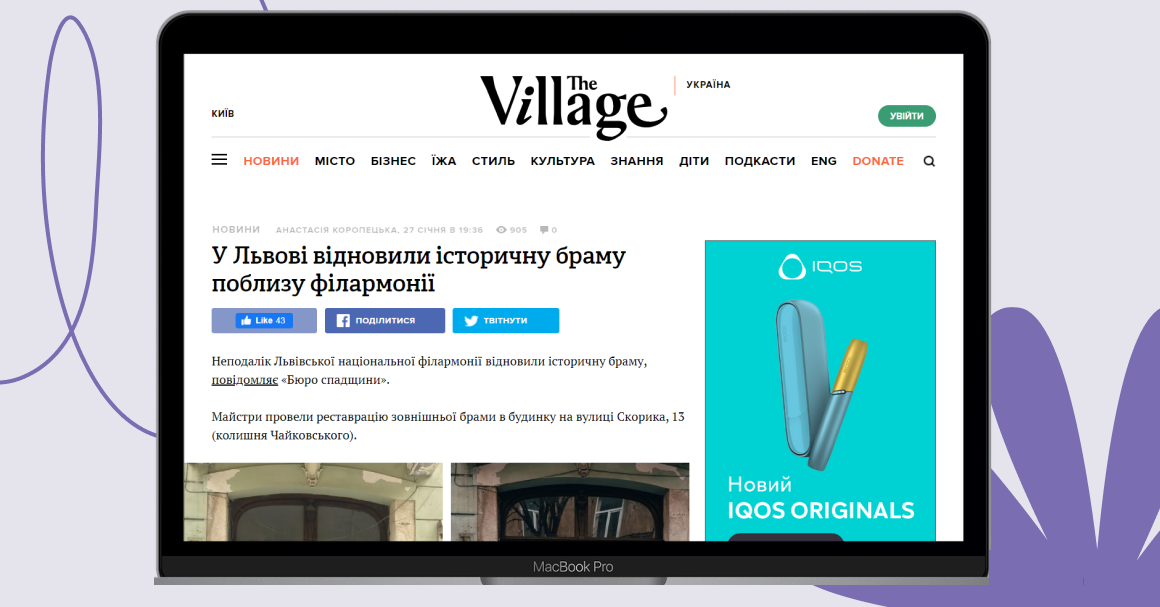
Local media gave us a lot of support — they understood how important restoration and heritage preservation are. The Bureau’s communications team kept the institution open and responsive to questions. And the other public events we ran as part of our regular work became a goldmine of ideas for local-history content and exclusives. Each week, Heritage Bureau news got picked up and reprinted by 5 to 20 outlets.
Bringing in opinion leaders and Insta points
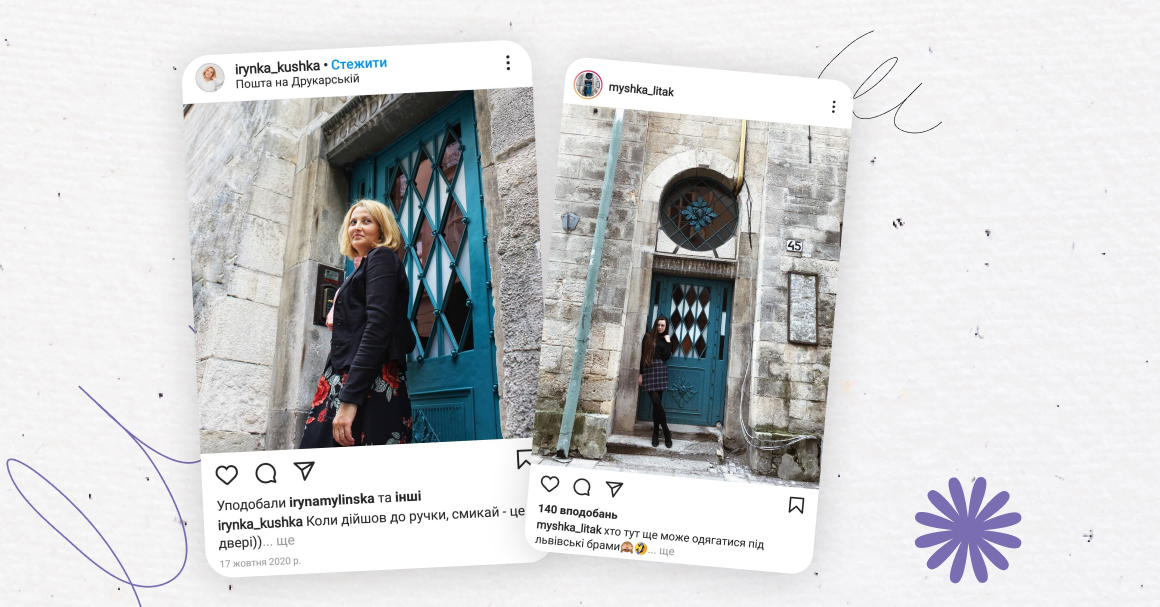
Thanks to our public communications, the restored gates gained extra value for the Instagram community too. We nicknamed some of the restored doors “Insta-gates” and turned them into spots that caught the eye of brands and content creators on social media.
 Offline events
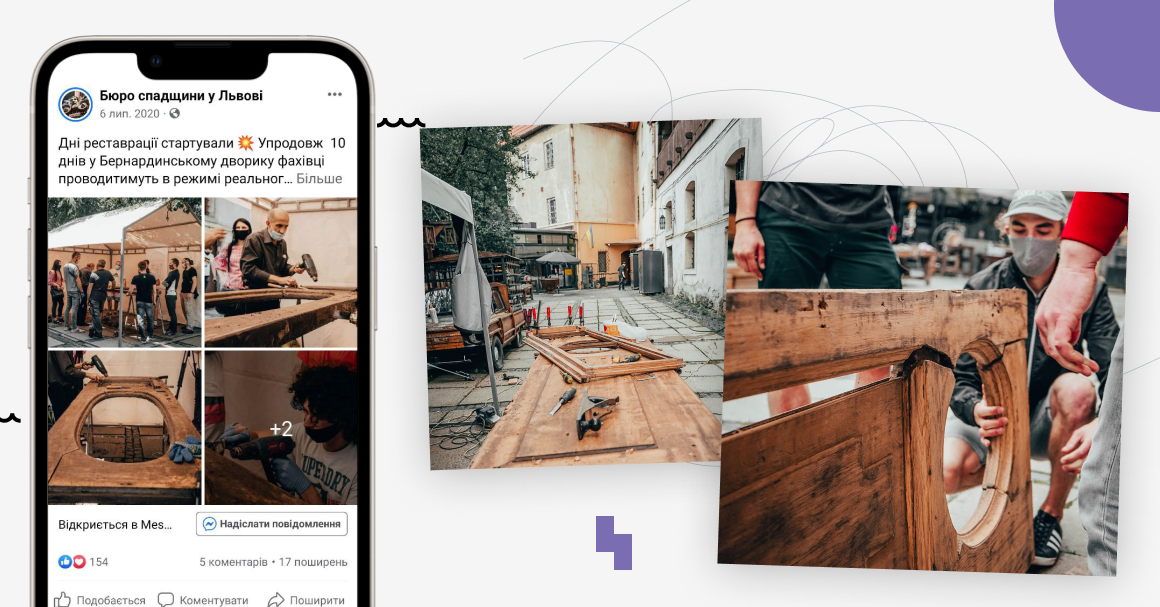
We ran the project under the tricky conditions of pandemic restrictions, which made offline events a real challenge. Even so, we managed to pull off “Restoration Days in Lviv.” In the city center we set up a special pavilion where you could watch the restoration of a historic oak gate and window in real time, and get expert advice on how to care for valuable historic woodwork.
 Print materials
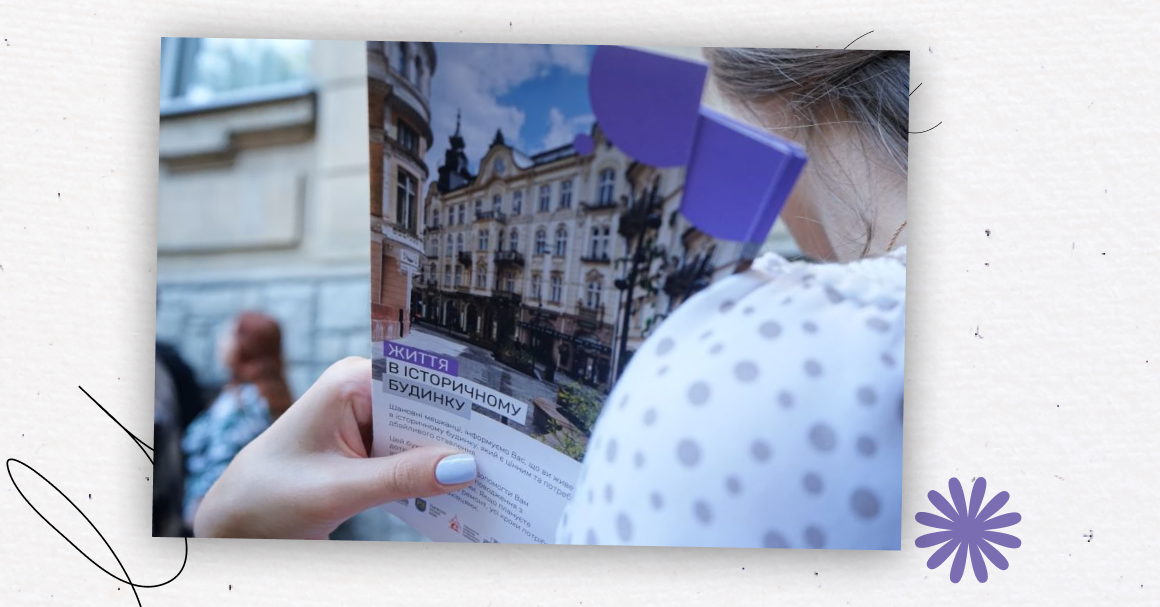
We prepared information booklets for residents, along with a series of leaflets featuring the restored gates of neighboring buildings, which we handed out to interested residents at meetings.
 STRATEGY AND CHALLENGES IN DELIVERY
In a project meant to change people’s behavior, one key element was a proactive communications strategy — acting ahead of the curve. The point was to prevent situations where residents might simply throw out their historic gates without realizing their value. So we also worked on prevention and on shaping how the community viewed such cases.
We also expected neighbors to step in and stop these would-be “renovators” in time, knowing the doors could be restored — and that such incidents would get talked about. And that’s exactly how it played out, just as planned.
The Heritage Bureau didn’t just offer vague slogans, but concrete solutions through the co-financing program. And it wasn’t only about preserving heritage — it was about residents’ safety too, offering a clear, transparent process and specific solutions.
Our main tools of persuasion were one-on-one meetings with active resident groups and media support.
The main mobilizing event was the intake of applications, which happened only once a year — always on September 1 — and ran for two weeks. That’s where the marketing principle of limited time kicked in.
The mobilizing activities came in two types:
- direct — handing out information leaflets about the program door to door,
- indirect — calls to take part through traditional media and social networks.
Residents signed up on their own, using the contacts and channels we’d spread through the campaign.
Since a new application round opened every year, it was important to show those who’d signed up that the queue was moving and it was worth the wait. So we published transparent lists of everyone registered, and as part of the ongoing campaign we showcased already-restored gates every week across all the institution’s channels and in the media. Continuous, long-term communication is absolutely crucial in public campaigns — it’s the only way to shape public opinion and bring about real change.
“The project was a success in Lviv and got noticed across the country — it sparked interest among activists and officials in other cities, who started trying to launch similar initiatives of their own. The institution provided consultations to anyone interested,” says Heritage Bureau director Pavlo Bohaichyk.
The city’s co-financing program is still running today, carried out by the Heritage Bureau’s in-house team.