


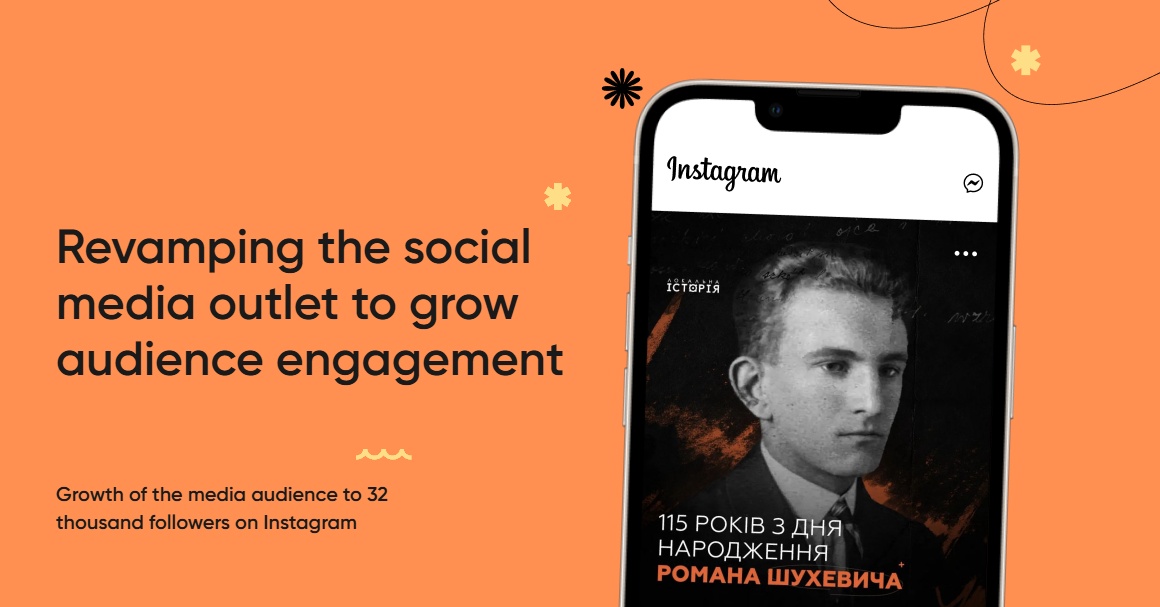
Revamping the social media of the “Local History” outlet to grow audience engagement
In early 2021, the editorial team of the historical media project “Local History” reached out to me — a publication with an established, loyal audience and its own glossy magazine, podcasts, YouTube channel and special projects. The key task was to update the approach to social media content without losing the trust of the audience the team had built up over years.
Despite a strong brand and tens of thousands of followers, the outlet’s social media wasn’t working at full capacity: content was mostly limited to Facebook posts linking back to the website, and the potential for engaging readers remained untapped.
Notably, with no spend on advertising, Instagram grew from 1,124 followers to 34,000 in a year and a half.
 Here’s what the brief to me actually was:
- activate the publication’s existing audience;
- develop and implement a single, recognizable visual style for posts;
- apply new tools for interacting with readers;
- grow the Instagram and Telegram channels.
Key results in numbers
Within the very first month of collaboration, post reach grew by 429%, and by the third month this figure increased by 1,276%. At the same time, paid reach never exceeded 4.84% of the monthly total.
Over the first three months, the accounts’ audience grew by 15%. This wasn’t an end in itself, but the positive dynamic confirmed the chosen strategy was right. It worked most clearly on Instagram, where the audience grew by 789% over the year.
 The start: audit and aligning the workflow
Before the collaboration began, I carried out an in-depth technical audit of the pages. Facebook was the most active — over 50,000 followers. The team had already come a long way and earned its readers’ trust, so my task was first and foremost not to undo what had been built: I analyzed the existing audience so that new content approaches wouldn’t alienate current readers.
Only after that did the gradual integration and synchronization of my work with the in-house editorial team begin — a team that included a project manager, a news-feed editor, a copywriter and a designer. In effect, the outlet gained a parallel editorial track: I worked with current content, “repackaged” old material, created new content and was responsible for its distribution.
The key to the result was the team’s trust in my decisions. I took full control over the publishing of posts, creating a separate content matrix based on the weekly editorial plan. Essentially, I determined how the news feed would look in followers’ feeds, strictly following the concept as the project’s roadmap. Each month, between 11% and 25% of all posts were ones I created in addition to the outlet’s main media plan.
Innovations introduced on Facebook
A unified visual style. Before the collaboration, the outlet’s feed looked fairly monotonous — mostly posts with a link to the website. I introduced new presentation formats and integrated recognizable design elements into each content type. I based this on the corporate colors — orange and white, occasionally adding black for harmonious accents, for example in posts on the theme of tragic events of the past.
 Caption videos. One of the tasks was to generate additional content based on editorial material. The appearance of caption videos (short video stories with subtitles) in the Facebook feed caused a real sensation: the audience helped make them go viral, and at times they reached 80,000 in reach and thousands of shares. This format became one of the most successful of those I proposed.
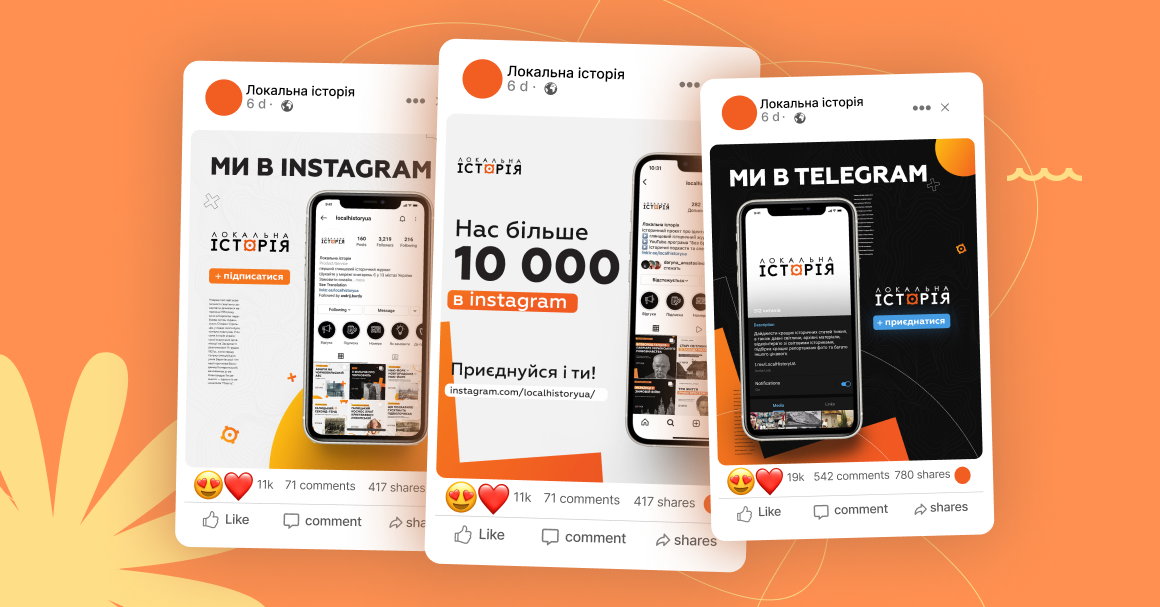
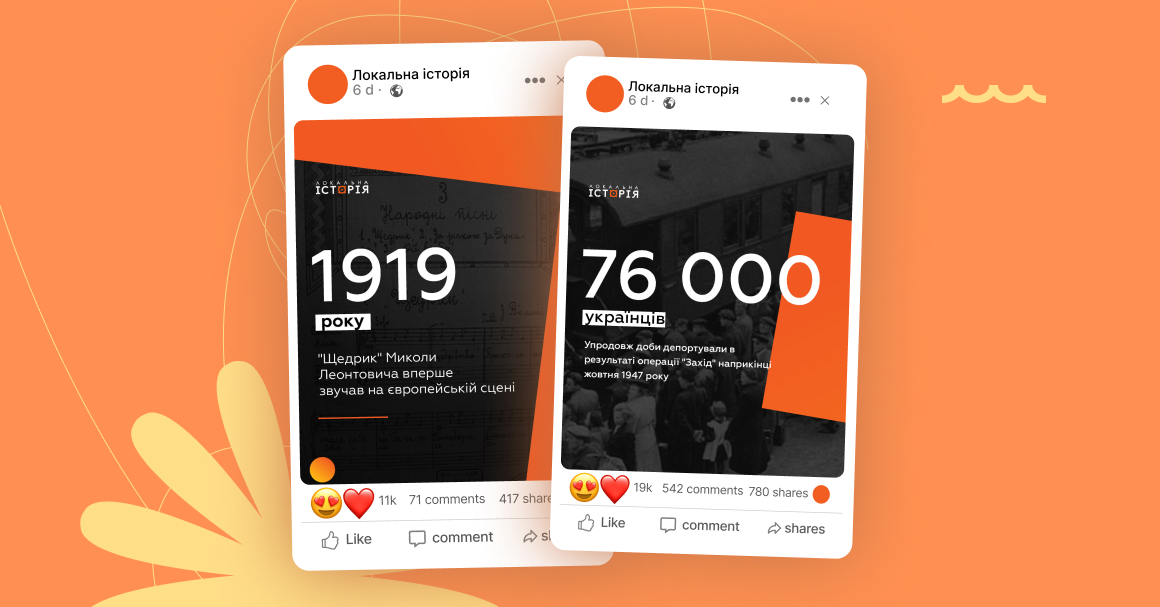
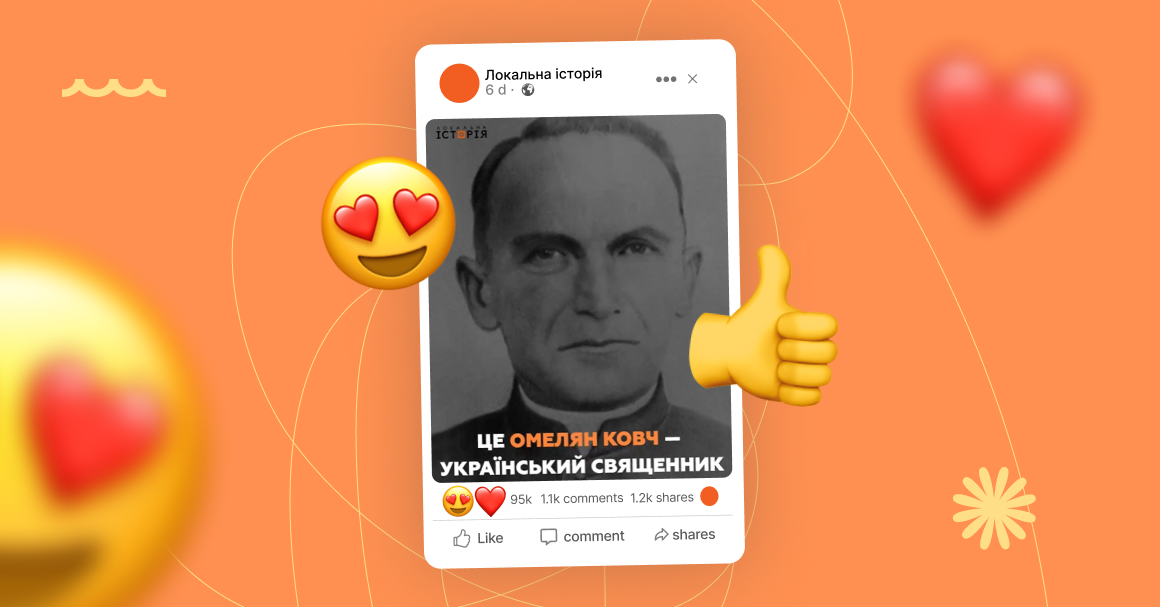 New sections and visualization. The content was diversified with new recurring sections, through which I announced or extended the life of website publications. Infographics became a separate tool — a way to present complex information accessibly and place the emphasis correctly. And systematic promotional materials for our own platforms helped inform the audience about the media’s presence across different channels.
Innovations introduced on Instagram
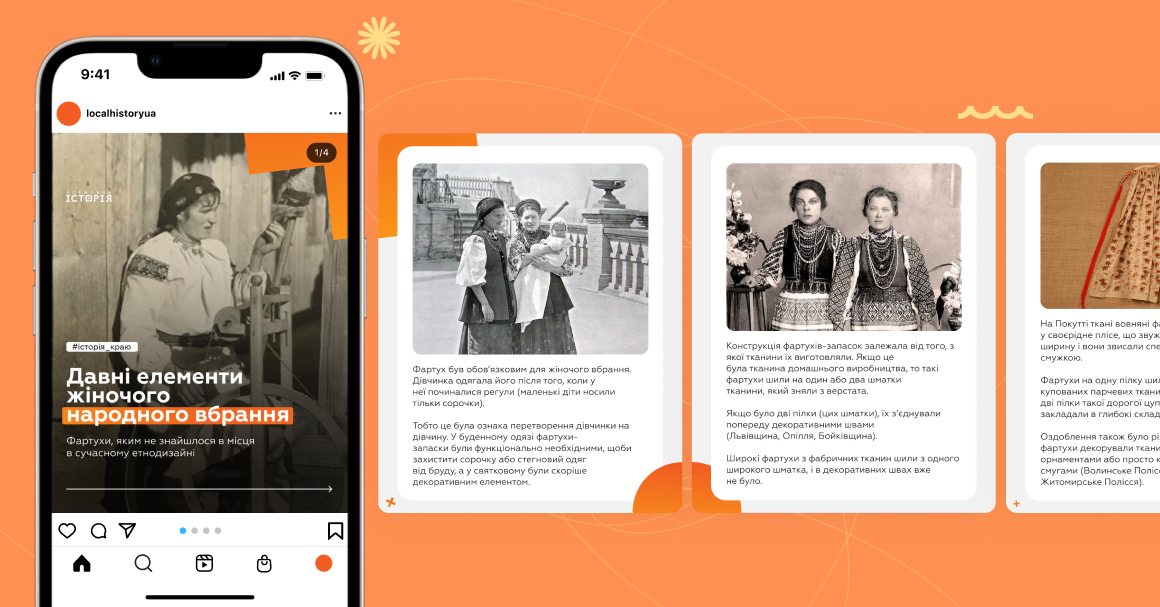
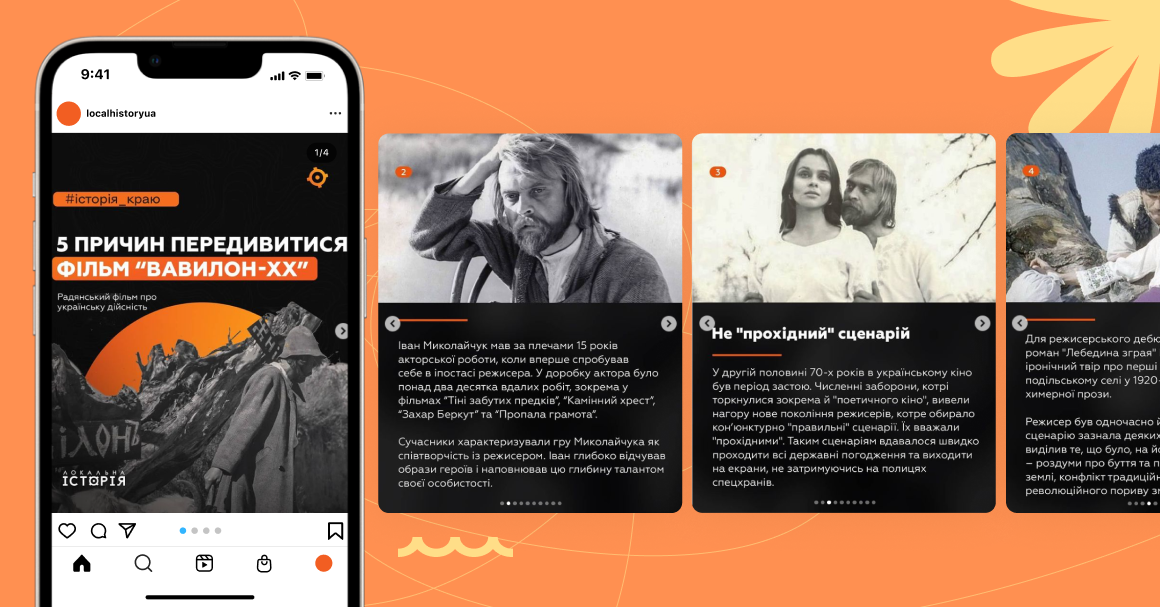
Carousels as anchor posts. The “Local History” page, with over a thousand followers, had significant growth potential given the audience’s strong interest in editorial material. I selected topics that adapted easily to the specifics of Instagram — concise, fast and dynamic. Carousels became the ideal presentation format in a magazine-layout style, and the platform’s capabilities allowed them to be supplemented not only with photos but also with video and audio.
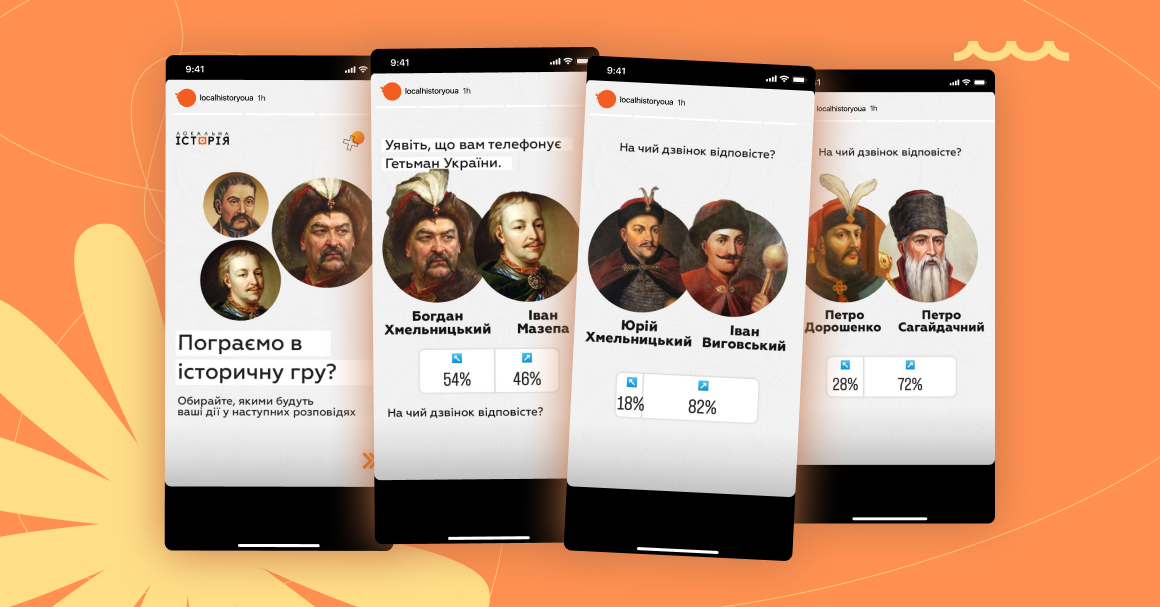
 Interactivity in Stories. Every historical post was reinforced through Stories, which revealed the essence of the topic in an informal, unconventional way. The most effective mechanic was “true or myth,” where the reader has to judge the accuracy of a historical fact: a quiz with correct and false answer options first sparked interest in the topic before the reader moved on to the full material. Occasionally I used lighter, entertaining Stories, and I revealed some topics through purely informational Stories using a storytelling formula.
 Growing the Telegram channel
Telegram became the platform for the biggest experiments and the most challenging task, since its growth was entirely organic. Over the year, the audience was increased by 753%, and this journey was accompanied by a constant search for — and changing of — approaches to presenting information.
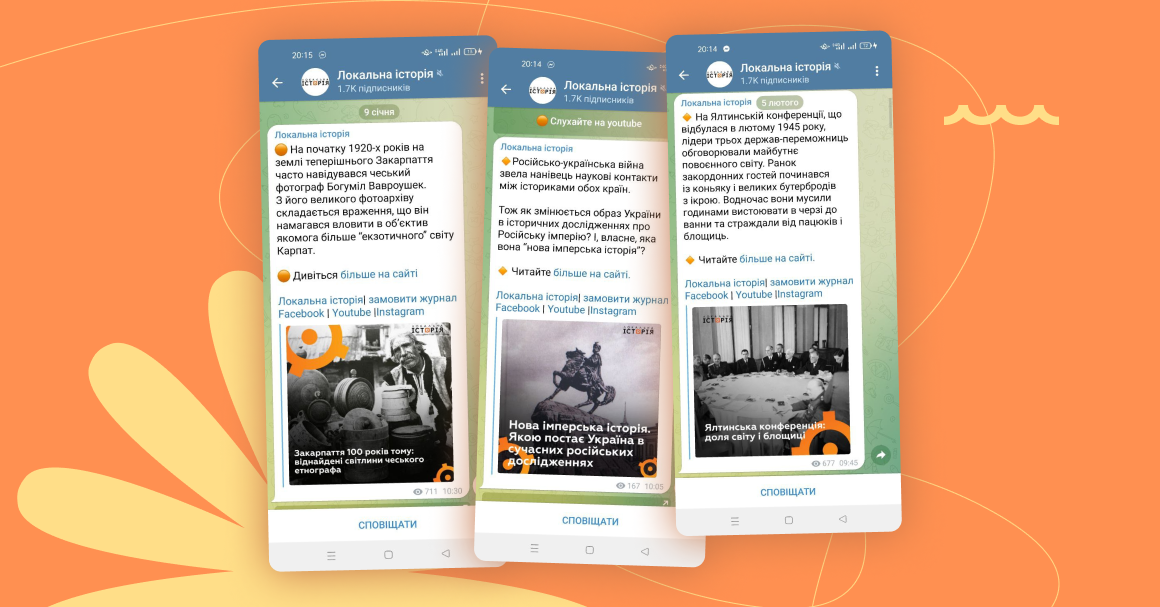 For this work I created special templates for designing post previews and set up a bot for layout and posting.